BANK002 — Understanding Bank Routing Codes
Last updated: September 22, 2026
When linking a bank account — your own or one belonging to a connected customer — the most common cause of a failed or delayed transfer is an incorrectly entered bank code.
Bank codes go by different names depending on where the account is held. Use the quick reference below to find the right code for your country, then check the country detail section for the exact format Xtrm expects. If you are unsure, your bank can confirm the code for your specific branch.
Your bank code is not the same as a BIC/SWIFT code. The two serve different purposes and are rarely interchangeable. See What is a BIC/SWIFT code? below.
If you have your IBAN (International Bank Account Number), you can identify your bank code with an IBAN lookup tool.
For formatting requirements covering additional currencies, see BANK004 – Bank formatting guide.
Quick reference
Country / Currency | Name of the code | Length and format | Enter it as |
|---|---|---|---|
Australia (AUD) | Bank State Branch (BSB) | 6 digits, shown as XXY-ZZZ | 6 digits, no dashes |
Canada (CAD) | Routing code / clearing code | 9 digits | 9 digits, no spaces |
Eurozone (EUR) | Bank code | Varies by country | As it appears in your IBAN |
Hungary (HUF) | Local Routing Code | 8-digit bank branch code, numeric only, not SWIFT/BIC | 8 digits, no letters |
India | IFSC Code / MICR Code | 11-digit alphanumeric code / 9 Digit Code | As issued by your bank |
Israel | Bank Code | Bank Branch Code - 5 digits | As described below |
Poland (PLN) | Routing code | 8 digits | 8 digits, no spaces |
South Africa (ZAR) | Branch code | Exactly 6 digits | 6 digits |
United Kingdom (GBP) | Sort code | 6 digits, shown as XX-YY-ZZ | 6 digits, no dashes |
United States (USD) | Routing number (ABA) | 9 digits | The ACH routing number, not the wire number |
Your country is not listed? Most other countries use the bank code contained in the IBAN. Look it up with an IBAN lookup tool, or ask your bank for the code used for domestic electronic transfers. If you are still unsure, contact Xtrm support before submitting the account.
Country details
Australia (AUD) — BSB
The BSB code is used alongside the account number to identify the recipient of a transfer. It is written as XXY-ZZZ:
XX — the bank or financial institution receiving the money
Y — the state the branch is located in
ZZZ — the specific branch
Enter all 6 digits with the dash removed. For example, a BSB shown as 123-456 should be entered as 123456.
Canada (CAD) — Routing code
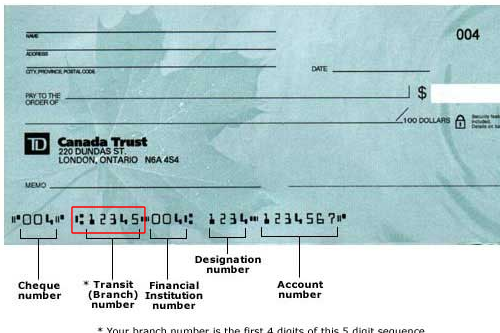
A Canadian routing code is 9 digits, built in this order:
0 + institution number (3 digits) + transit number (5 digits)
The institution number identifies your bank. The transit number identifies the branch where the account is held. For example, institution 004 and transit 12345 combine to give 000412345.
If your account number needs to be 11 digits
Some Canadian banks require an 11-digit account number when linking. If that applies to your account, enter the first four digits of your transit number followed by your 7-digit account number.
Eurozone (EUR) — Bank code
The number of digits varies by country. Your bank code is contained within your IBAN — you can identify it with an IBAN lookup tool, or ask your bank for the code specific to your branch.
Hungary (HUF) — Local Routing Code
Important: Hungarian HUF accounts require an 8-digit bank branch code in the Local Routing Code field, not a SWIFT/BIC code. SWIFT codes, such as OTPVHUHB, contain letters and will cause validation errors. To find your 8-digit branch code, check your bank statement, look in your online banking portal, or contact your bank directly. The code must be exactly 8 digits with no letters.
When linking a Hungarian HUF bank account, confirm your IBAN starts with HU and has exactly 26 characters after the HU prefix.
India — IFSC Code / MICR Code
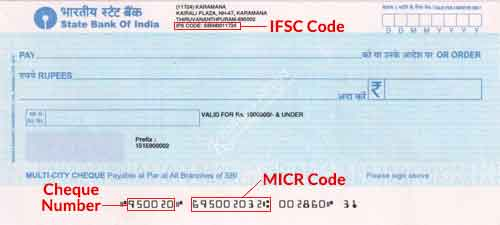
IFSC (Indian Financial System Code) is an 11-digit alphanumeric code that helps to identify different bank branches that deal with online fund transfers either via NEFT (National Electronic Funds Transfer), IMPS (Immediate Payment Service), or RTGS (Real Time Gross Settlement).
Israel — Bank Code
Last two digits of the Bank code: XX and three digits of the Branch code: ZZZ
0 + bank code and Branch code:
Locate the codes in your IBAN # with an IBAN lookup tool.
Poland (PLN) — Routing code
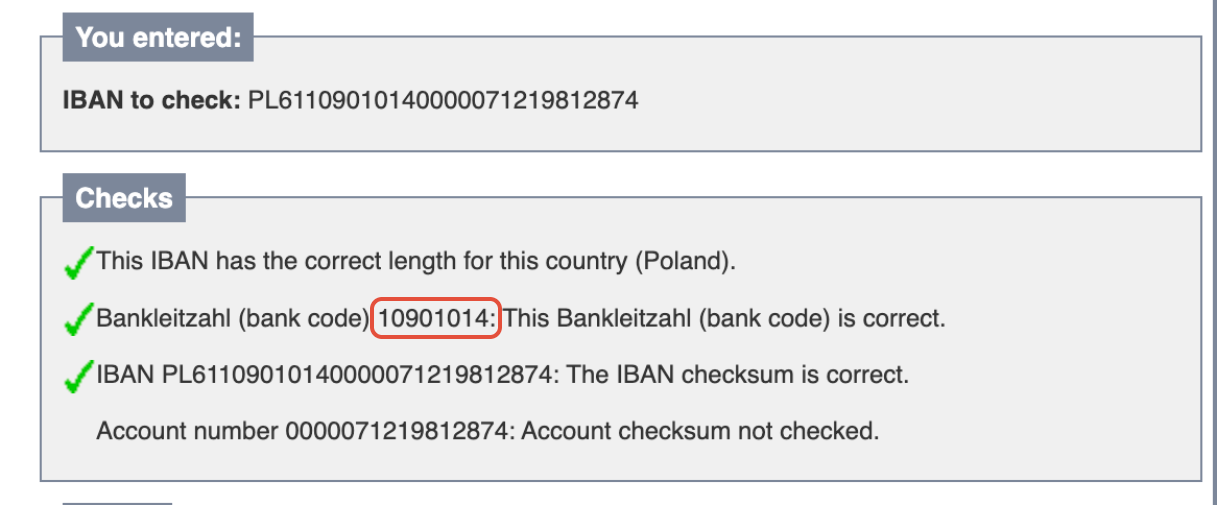
The Polish routing code is 8 digits, made up of:
YYY — bank code
XXXX — branch code
Z — national check digit
You can locate the 8-digit code within your IBAN using an IBAN lookup tool.
South Africa (ZAR) — Branch code
Enter the bank branch number — exactly 6 digits.
United Kingdom (GBP) — Sort code
A UK sort code is 6 digits, usually written as XX-YY-ZZ.
Enter all 6 digits with the dashes removed. For example, a sort code shown as 60-30-30 should be entered as 603030.
United States (USD) — Routing number (ABA)
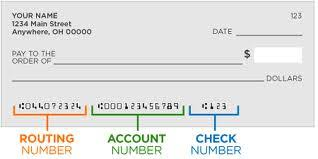
The routing number is 9 digits and is typically printed along the bottom of a cheque.
Some banks maintain two routing numbers — one for ACH transfers and one for wire transfers. Xtrm requires the ACH routing number. In many cases the two are identical, but confirm with your bank before submitting.
What is a BIC/SWIFT code?
A BIC (Bank Identifier Code) is a unique identifier for a bank, typically used for international wire transfers. SWIFT stands for the Society for Worldwide Interbank Financial Telecommunication, the network the codes are registered against.
The correct BIC/SWIFT code ensures funds reach the recipient's account at the right bank. If you do not have the code for your recipient's bank, the recipient should request it from their bank rather than guessing.
A BIC/SWIFT code is either 8 or 11 characters:
4 letters — the bank
2 letters — the country
2 alphanumeric characters — the bank's location
3 alphanumeric characters (optional) — a specific branch